
How I Built a Second Brain for Agents
The notes aren't for me anymore. They're for the next agent that asks me what I already know.

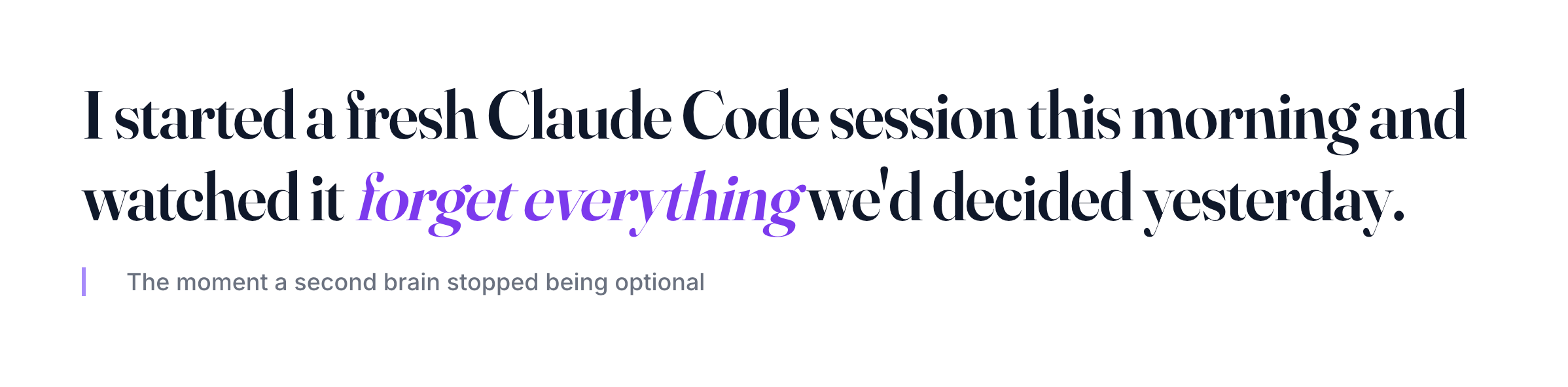
I began a new Claude Code session a few mornings ago. It forgot everything we decided the day before.
The architectural call. The naming convention. The reason we picked PostgreSQL over SQLite for a side project. Gone.
That’s when I realized a second brain isn’t just a luxury; it’s a must-have for productivity.
It’s the layer that makes a goldfish-memory agent truly understand what I’m building.
This is the setup I run every day in 2026. One Obsidian vault. It uses plain Markdown on disk. There are four folders, a daily note as the front door, and a short list of essential plugins.
Why a Second Brain Stopped Being Optional
The “second brain” idea isn’t new. Tiago Forte created a complete method, which he published as *Building a Second Brain* in 2022. For years it lived in the productivity-influencer corner of the internet. PARA folders, weekly reviews, color-coded tags. Useful, but easy to skip if you were a backend engineer with a working memory and a search bar.
Then 2026 happened.
Forte himself made the pivot explicit in March, in a piece called “Introducing The AI Second Brain.” His exact line: “Personal Context Management is taking over Personal Knowledge Management. The new bottleneck isn’t AI capability; it’s your ability to provide AI the right information at the right time.”
Read that twice if you have to.
The founding figure of the second-brain movement is now arguing the system isn’t for you. It’s for the model.
That tracks with what I’ve been feeling. Every conversation with Claude Code starts from scratch. Every new agent run is a stranger sitting down at your desk.
The notes aren’t for me anymore. They’re for the next agent that asks me what I already know.
Why Obsidian, Not Notion, Not Apple Notes
I’ve used most of them. I’ve quit most of them.
Obsidian wins for one reason that doesn’t show up in feature comparisons. Your notes are plain Markdown files in a regular folder on disk. Not a proprietary database. Not a JSON blob behind an API. Just .md files you can cd into.
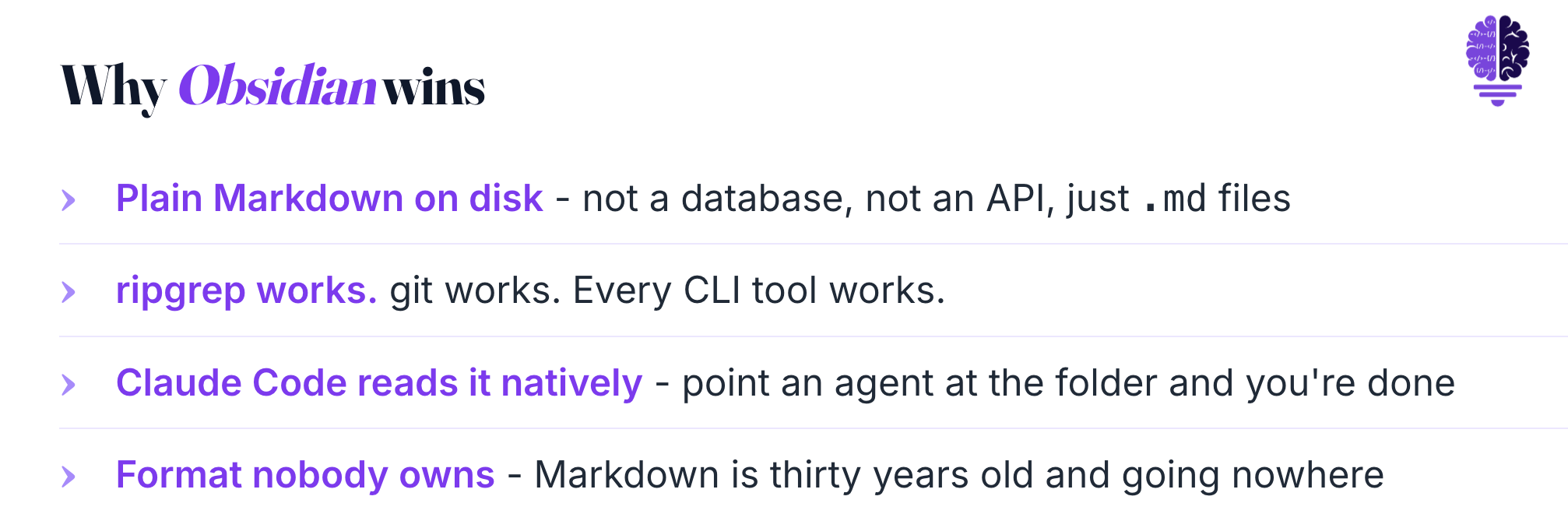
That changes everything downstream. ripgrep works. git works. Claude Code reads the folder natively. Tomorrow’s tools will read it too. Markdown is a thirty-year-old format that no one owns. Obsidian’s official line is “you’re never locked in,” and for once the marketing matches reality.
Notion is a great tool for teams. It’s not a great tool for an engineer’s brain.
Apple Notes is fine if your life is inside Apple’s ecosystem and you never plan to point a CLI at anything. That’s not me, and if you’re reading this, it’s probably not you either.
Obsidian’s been around since March 2020, hit 1.0 in October 2022, and the base app is free. You install it, you create a vault, you own the data.
The Folder Structure That Actually Works
Forte’s PARA framework is the spine. Four top-level folders.
Projects. Active builds with a finish line. The feature branch you’re shipping this sprint.
Areas. Ongoing responsibilities. “text-content-creation” “video-content-creation” “BackendOS,” whatever you carry week after week.
Resources. Reference material. Snippets, patterns, architecture docs you’ll reach for again.
Archive. Everything dormant. Don’t delete it. Move it.
Forte’s principle is to organize according to the projects and goals you are committed to right now. Actionability over taxonomy. We want a clean ontology. PARA wants a clean inbox.
The trap is over-engineering the system before you use it. It’s the most common failure mode, period. Some folks call it “procrastination in disguise.” The perfect setup that never ships.
I’ve fallen into it twice. Both times I rebuilt my vault from scratch instead of writing in it.
Start flat. Four folders. Refactor when it actually hurts, not before.
Daily Notes Are the Front Door
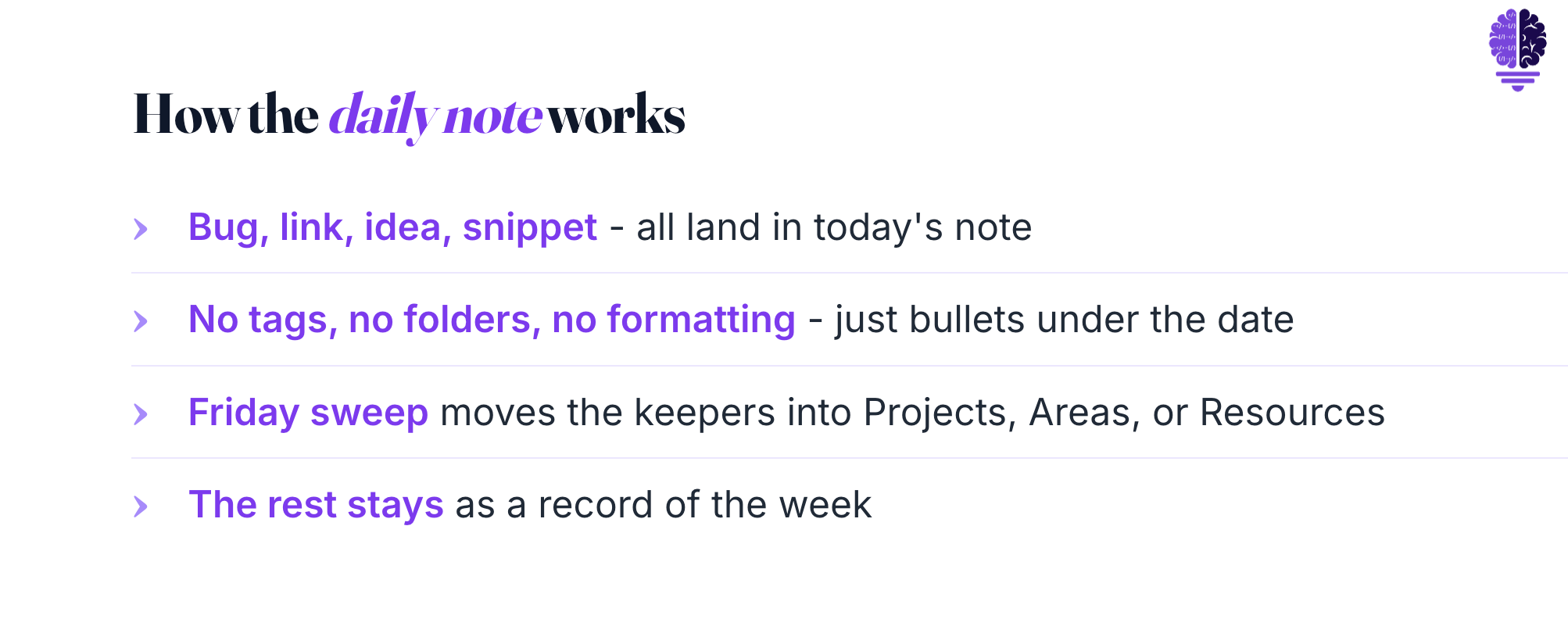
The daily note is the most crucial habit in the system. It’s a core plugin in Obsidian, not just a community add-on. One keyboard shortcut opens today’s note.
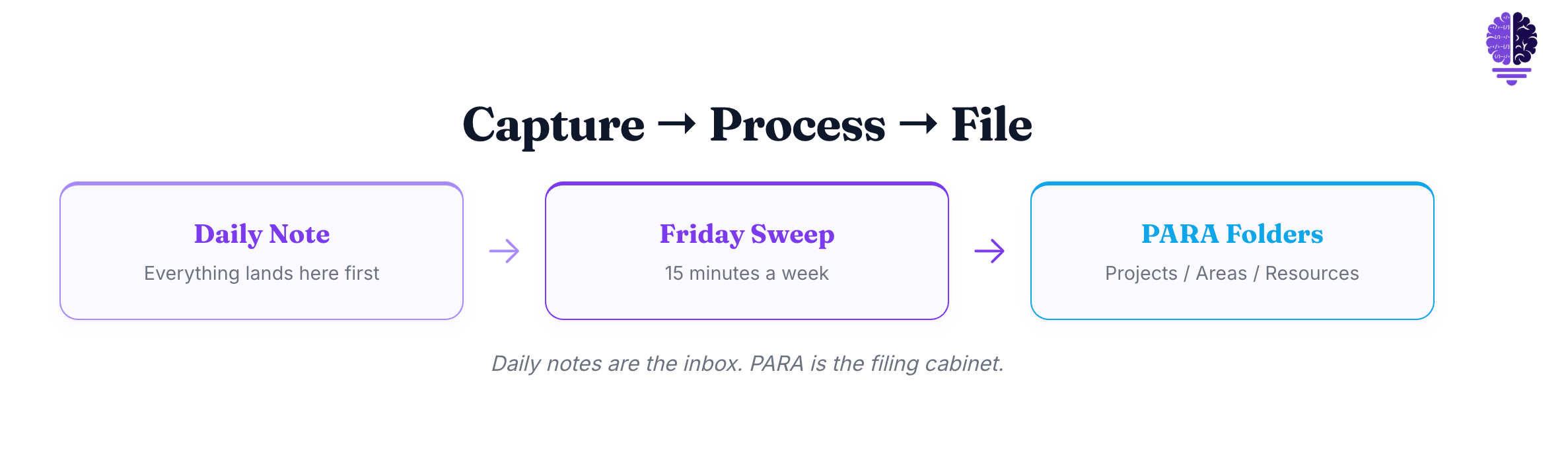
Everything lands there first. Bug I just hit. Link a coworker dropped in Slack. Half-formed idea about an agent pattern. A snippet I want to keep. No tags, no folder decision, no formatting overhead. Just a bullet point with the date stamp at the top.
Friction kills capture.
The processing happens later. I have Claude do a fifteen-minute sweep on Friday. Anything still useful gets moved into Projects, Areas, or Resources. Anything that’s just noise gets left in the daily note as a record. Without that weekly sweep, daily notes turn into a graveyard of unprocessed ideas. Your second brain becomes just a junk drawer.
The mental model: daily notes are the inbox. PARA is the filing cabinet.
The brain only works if you actually write to it. And you’ll only write to it if writing costs nothing.
The Real Reason This Matters Now
This is the part I’d skip past in 2024 and lead with in 2026.
A second brain in Obsidian isn’t just for you anymore. It’s the persistent memory layer for every agent you point at it.
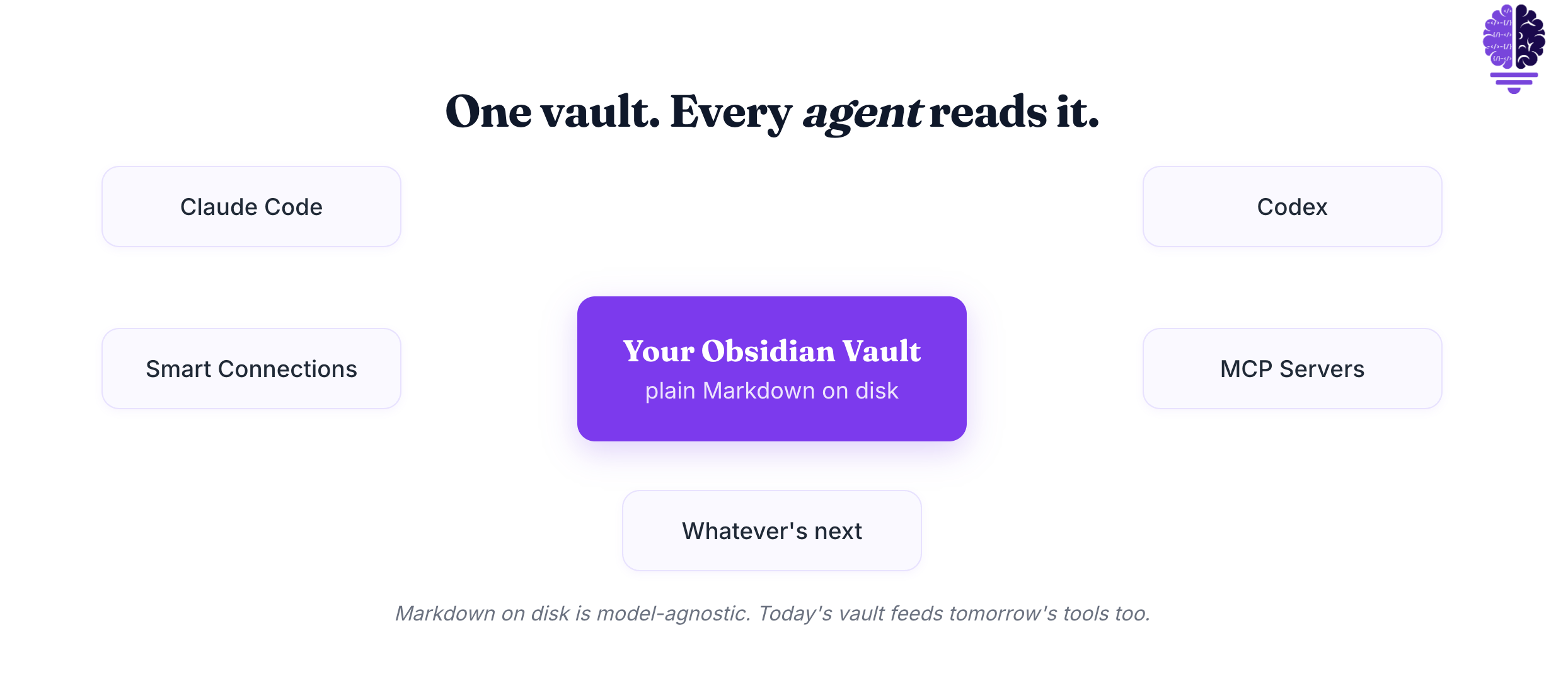
The workflows are already here. You can start your day with a prompt for Claude to open today’s notes and recap yesterday’s tasks. Then, at the end of the day, use a prompt to file those notes into the correct folders. Others may use Claude with the filesystem MCP server to manage a 12-million-word vault. Bulk frontmatter edits, semantic search by concept, link repair across years of notes.
Pick whichever pattern matches your taste. The substrate is the same.
The notes aren’t becoming less valuable. They’re becoming the most valuable thing on disk.
Cheers friends,

Eric Roby
Find me online: